
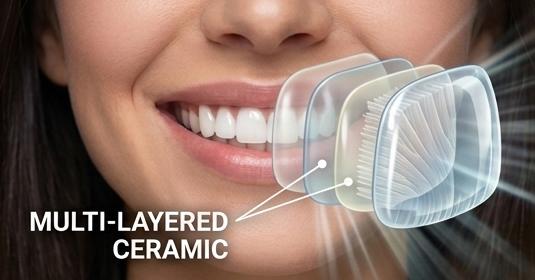
Porcelain veneers are crafted by a dental laboratory from layered ceramic.
The Short Answer
Porcelain veneers are custom-made by a specialist dental laboratory. They offer the most natural-looking, stain-resistant result and the longest lifespan, typically 10 to 20 years with good care.
Hybrid veneers are made from a high-performance composite resin. They usually need less enamel removed, can be repaired if they chip and are a more budget-friendly option, typically lasting 5 to 10 years.
How Each Type Is Made
Porcelain veneers
Porcelain veneers are ultra-thin ceramic shells. After your tooth is prepared, a dental laboratory crafts each veneer to the shape, size and shade you've chosen. They're then bonded to the front of your natural teeth.
Hybrid (composite) veneers
Hybrid veneers use a composite resin made of tooth-coloured material with fine ceramic or filler particles. They're a high-performance alternative to porcelain and can be applied with minimal tooth preparation.
The right veneer isn't the most expensive one. It's the one that suits your teeth, your bite and your goals.
Side by Side: The Key Differences
Appearance
Porcelain reflects light much like natural enamel, giving an exceptionally natural appearance. Hybrid veneers also look natural and can deliver beautiful results.
Stain resistance
Porcelain has a highly stain-resistant surface. Composite materials can pick up some staining over time, so tea, coffee and red wine are worth keeping in mind.
Tooth preparation
Porcelain veneers involve removing a thin layer of enamel so the veneer sits naturally. Hybrid veneers usually need less enamel removal. Removing enamel can't be undone, which is one reason it's worth talking through both options carefully.
Repairs
If a hybrid veneer chips, it can often be repaired. A damaged porcelain veneer usually needs to be replaced.
Lifespan and cost
With proper care, porcelain veneers can last 10 to 20 years, while hybrid veneers typically last 5 to 10 years. Hybrid veneers are the more cost-effective option upfront.
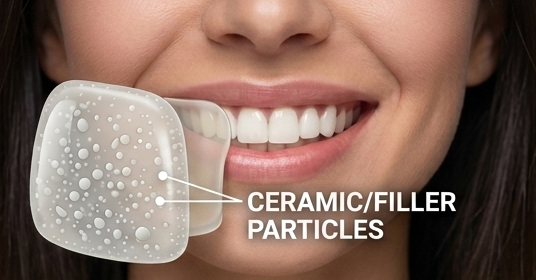
Hybrid veneers use composite resin with fine ceramic or filler particles.
Which Is Right for You?
Porcelain may suit you if you want the most natural, stain-resistant result and the longest lifespan, and you're comfortable with the extra preparation. Hybrid veneers may suit you if you'd like less enamel removed, the option to repair chips or a lower upfront cost.
Veneers also aren't right for everyone. They may not be the best option if you grind your teeth heavily (a night guard may help), have large gaps or severe crowding, have active gum disease or have very little enamel remaining. In those cases, your dentist can talk you through other treatments, such as crowns or teeth whitening.
What to Expect at Soul Dental
Whichever material you're leaning towards, the process starts with a consultation. We assess your teeth, talk through your goals and take photos and digital scans. Using your scan, you can trial a preview of your new smile before anything permanent is done, so you can decide on size, shape and colour.
You can read more about our porcelain and hybrid veneer options, including how the process works step by step.
Looking After Your Veneers
Both types last longest with good care. Brush twice a day, floss daily, avoid biting very hard objects like ice or pens, and keep up your regular check-up and clean so your dentist can keep an eye on your veneers and the teeth underneath.
As with any dental treatment, veneers carry some risks, such as temporary sensitivity after preparation. Your dentist will explain what to expect for your situation before you decide.
Frequently Asked Questions
With proper care, porcelain veneers can last between 10 and 20 years. Hybrid (composite) veneers typically last 5 to 10 years.
Composite can pick up some staining over time. Porcelain has a highly stain-resistant surface, which is one reason it's often chosen for a long-term result.
A chipped hybrid veneer can often be repaired. A damaged porcelain veneer usually needs to be replaced.
Placing veneers involves removing some enamel, more for porcelain and less for hybrid veneers. Enamel doesn't grow back, so your dentist will discuss whether veneers are right for you before any preparation.
Not sure which veneer suits your smile?
Book a veneer consultation with Dr Rita Lai (dentist) and the team at Soul Dental, Varsity Lakes.